
Start with the piece itself
Write down the approximate height, width, and depth of the furniture in inches or feet. Note whether it has loose sections, glass panels, delicate surfaces, or parts that stick out. If you know how it comes apart, describe that separately from the transport. A piece that cannot break down needs the route reviewed more carefully than one that fits through openings in two or three pieces.
Measure the route, not just the door
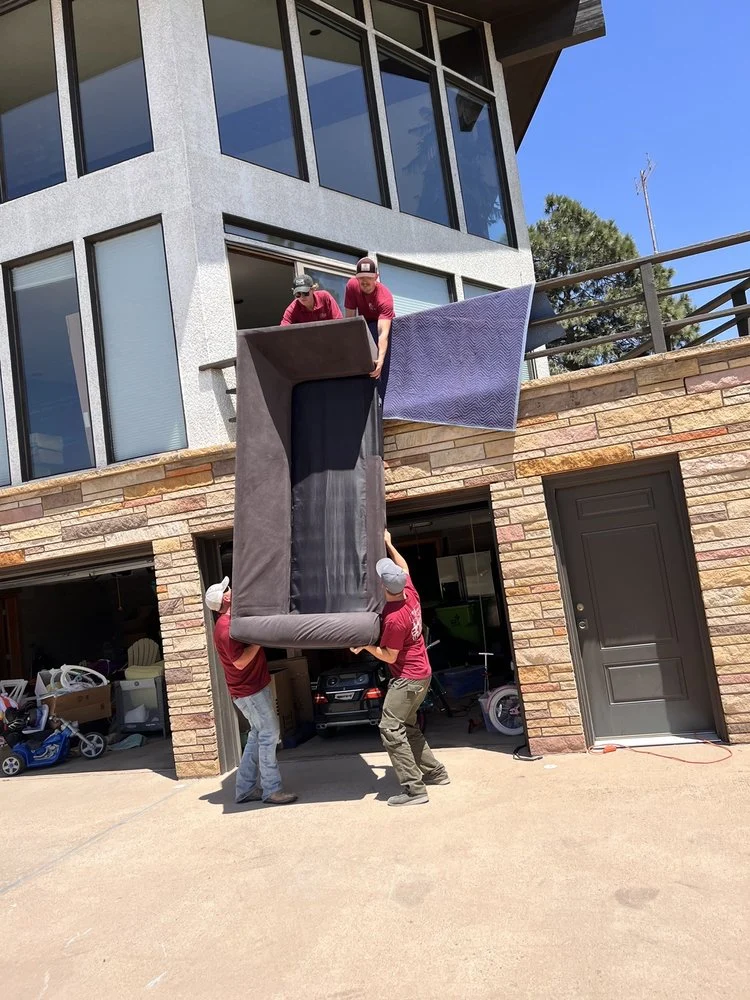
Walk from the furniture to the loading point and measure the openings it has to pass through. Door widths, hallway widths, the turn at the top of a staircase, landings, and overhead clearance all matter. A wide front door does not help if the hallway narrows past it or if a turn forces the piece to be angled. Note the longest dimension of the piece and compare it with the diagonal space available at each turn. If the piece cannot be angled through a corner, that section of the route needs a different plan, such as a window removal or an alternate path.
Include stairs, elevators, and landings
For stairs, mention the number of steps, the width, whether there is a landing partway up, and whether the staircase turns. For an elevator, give the door height and width, the cab depth, and the car capacity, plus whether the elevator needs a reservation. For both, note the distance from the loading spot to the entrance. A long carry through a yard, across a driveway, or up a set of exterior stairs changes the crew size and the time needed.
Add photographs that show the angle
Take a wide shot of each difficult point as well as a close-up. Include the approach to a staircase or doorway so the crew can judge the angle a piece would take. If there are obstacles along the route, such as a narrow gate, a low beam, or landscaping, photograph those too. Keep personal documents, access codes, and identifying paperwork out of the photos.
Agree on preparation before the day
Send the details with your estimate request and ask what needs to happen before moving day. Empty drawers and shelves when instructed, keep small fittings together in labeled bags, and separate loose contents. Do not force a piece through an opening to test whether it fits. If a route looks tight, tell the team in advance so they can bring the right equipment or propose an alternative path.